
A New Digital Era of Work
Artificial intelligence is reshaping the global job market in 2026 at a very fast speed. Many traditional jobs that once required human effort are now being handled by AI systems, automation tools, and machine learning software.
This shift is not only changing how companies operate but also how people earn money, build careers, and plan their future. The demand for digital skills is increasing while repetitive manual jobs are slowly decreasing.
In this article, we will explore how AI is replacing traditional jobs and which high-income skills you should learn to survive and grow in this new digital economy.
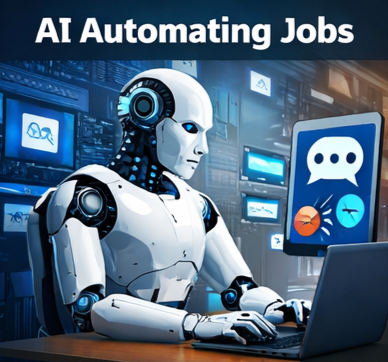
The Rise of AI in the Modern Workforce
Artificial intelligence is no longer a future concept—it is now a real part of daily business operations. Companies are using AI to improve speed, reduce costs, and increase productivity across all industries.
This transformation is creating a new type of workforce where machines handle repetitive tasks and humans focus on creative and strategic roles.
Key workforce changes in 2026:
- Widespread use of AI automation tools
- Growth of remote and digital-first jobs
- Reduction in manual and repetitive roles
- Increase in demand for technical skills
Traditional Jobs Most Affected by AI Automation
AI is not replacing every job, but it is strongly impacting roles that follow fixed patterns and repetitive tasks. These jobs are becoming less stable as automation improves.
Workers in these fields need to upgrade their skills to remain competitive in the changing job market.
Jobs at high risk:
| Job Type | Why AI is Replacing It |
| Data Entry Jobs | AI processes data faster and more accurately |
| Customer Support | Chatbots handle queries 24/7 |
| Basic Content Writing | AI tools generate content instantly |
| Admin Work | Automation tools manage workflows |
How Businesses Are Fully Adopting AI Systems
Modern businesses are integrating artificial intelligence into almost every department. This helps them reduce human workload and improve decision-making speed.
AI is now a core part of marketing, customer service, operations, and even hiring processes.
Common AI applications in companies:
- Chatbots for customer support
- AI-powered marketing campaigns
- Automated data analysis systems
- Smart recruitment tools
Economic Changes Caused by AI Job Replacement
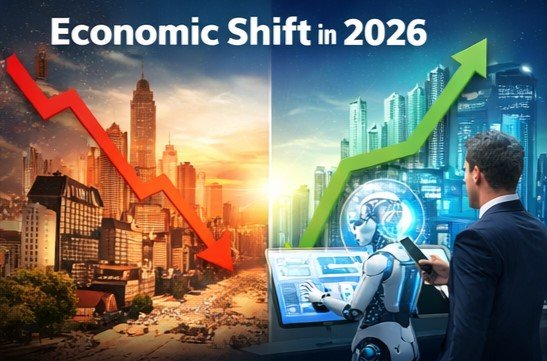
The rise of AI is creating major shifts in the global economy. Entry-level job opportunities are decreasing while demand for skilled professionals is increasing rapidly.
This is leading to a clear gap between low-skilled workers and high-skilled digital professionals.
Major economic effects:
- Decrease in traditional entry-level jobs
- Increase in freelance and remote work
- High demand for digital skills globally
- Growing income inequality in some sectors
Human Skills That AI Cannot Replace
Even with advanced AI technology, some human abilities will always remain valuable. These skills are essential for leadership, creativity, and decision-making.
Future-proof skills:
- Critical thinking and problem-solving
- Creativity and innovation
- Emotional intelligence
- Communication and teamwork
- AI collaboration skills
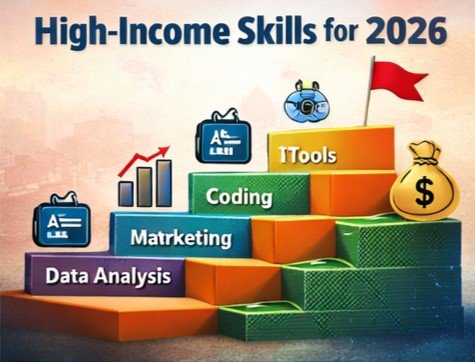
High-Income Skills You Must Learn in 2026
To survive in the AI-driven world, learning high-income digital skills is extremely important. These skills are in high demand and offer strong earning potential globally.
Top high-income skills:
- AI tools and prompt engineering
- Digital marketing and SEO
- Web development and coding
- Data analysis and visualization
- Freelancing and online business skills
Step-by-Step Strategy to Build Future Skills
Success in the AI era depends on continuous learning and practical experience. Random learning is not enough in today’s competitive environment.
A structured roadmap can help you grow faster and build real income opportunities.
Learning roadmap:
- Choose one digital skill to start
- Practice with real-world projects
- Build an online portfolio
- Start freelancing or internships
- Stay updated with AI trends
Future Job Market After 2026
The job market is not ending it is evolving into a hybrid system where humans and AI work together. New industries and opportunities are emerging every year.
People who adapt early will have a strong advantage in the future economy.
Future trends:
- AI and human collaboration workplaces
- Growth of remote digital careers
- Expansion of tech-based industries
- New AI-powered job roles
Personal Insight: Why I Believe Adaptation is Key
I have seen how quickly digital tools are changing the way people work. Skills that were important a few years ago are now being replaced by automation and AI systems.
This makes it clear that learning and adapting continuously is the only way to stay relevant in the modern job market.
Conclusion:
Artificial intelligence is not just replacing jobs it is completely transforming how people work and earn in 2026. Those who ignore this change may struggle in the future economy.
The best approach is to focus on high-income digital skills and stay updated with new technology trends. AI is not the enemy it is a tool that can be used for growth and success.
If you start learning today, you can turn this technological shift into a powerful opportunity for your future career.
FAQs about AI Job Replacement & High-Income Skills in 2026
1. Will AI completely replace human jobs in 2026?
No, AI will not completely replace human jobs. It will mainly replace repetitive and routine tasks. New jobs will also be created in AI, tech, and digital industries.
2. Which jobs are most at risk due to AI?
Jobs like data entry, basic customer support, simple content writing, and admin work are most affected. These roles involve repetitive tasks that AI can do faster.
3. What are the best high-income skills to learn in 2026?
Some top skills include AI tools, prompt engineering, digital marketing, SEO, coding, and data analysis. These skills are in high demand globally.
4. Can beginners learn AI-related skills easily?
Yes, beginners can learn AI tools and digital skills step by step. Many free and paid resources are available online for practice and learning.
5. Is AI a threat or opportunity for jobs?
AI is both a challenge and an opportunity. It replaces some jobs but also creates new high-paying roles for skilled people.
6. How can I survive in an AI-driven job market?
You can survive by learning digital skills, improving creativity, and staying updated with new technology trends. Continuous learning is the key.
7. Do I need a degree to learn high-income skills?
No, most high-income skills like SEO, freelancing, and AI tools can be learned online without a formal degree.
8. What is the future of jobs after 2026?
The future job market will be a mix of AI and human work. Remote jobs, digital careers, and AI-assisted roles will grow rapidly.