The Curse of Knowing Too Much: How Deep Expertise Can Quietly Undermine Your Research
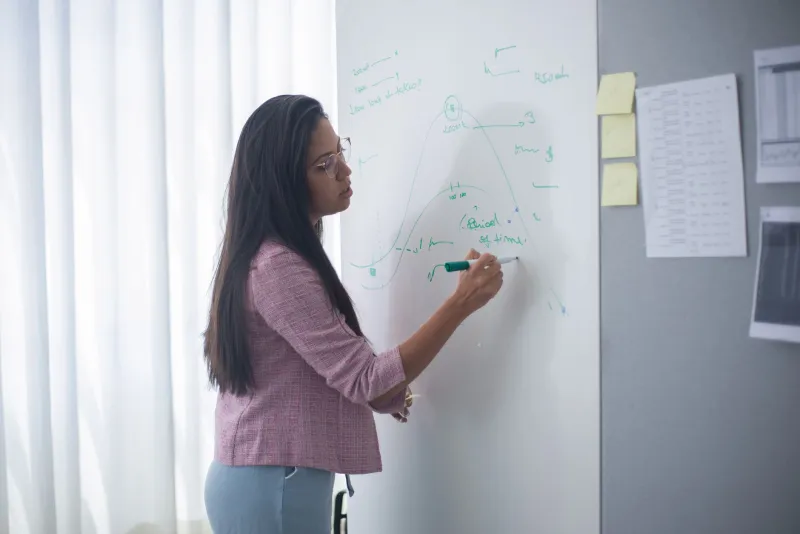
There is a particular irony embedded in the life of an accomplished researcher. The years you spend building specialized knowledge—the late nights, the failed experiments, the incremental mastery—eventually transform into something that can work against you. Not because expertise is dangerous, but because it is invisible to the person who holds it.
Cognitive scientists call this the "curse of knowledge." Once you know something deeply, it becomes nearly impossible to remember what it felt like not to know it. For researchers, this phenomenon doesn't just affect how you explain your work at a conference or to a non-specialist colleague. It shapes how you design studies, interpret data, document procedures, and evaluate your own conclusions. The assumptions you've internalized are no longer visible as assumptions. They've become the water you swim in.
Understanding this dynamic is not an exercise in humility for its own sake. It is a core research skill—one that affects reproducibility, collaboration, peer review, and ultimately the reach and credibility of your work.
What Expertise Actually Does to Your Thinking
When you are new to a field, every methodological decision feels like a choice. You weigh options, consult guides, ask questions. Over time, however, those choices become automatic. You stop deliberating because you no longer need to. Your brain has compiled years of deliberate reasoning into efficient, largely unconscious heuristics.
This is not a flaw. It is how expertise works, and it is genuinely useful. The problem arises when those automatic decisions go undocumented—not because you are being careless, but because they no longer register as decisions at all.
Consider a senior researcher designing a qualitative study. She selects a particular coding framework without consciously noting that alternative frameworks exist, or that her choice rests on theoretical commitments that a reviewer from a different tradition might contest. She doesn't document this because, to her, the choice is obvious. To a graduate student attempting to replicate the study, or a collaborator from an adjacent discipline, it is anything but.
This is the first way expertise creates blind spots: it renders implicit what should be explicit.
The Communication Dead Zone
Expertise also affects how researchers communicate their work, and the consequences here extend well beyond academic writing style. When you speak or write from deep familiarity, you naturally skip steps. You use field-specific shorthand. You assume shared context that may not exist. And crucially, you may not realize you are doing any of this.
This creates what might be called a communication dead zone—a gap between what you intend to convey and what your audience actually receives. In a research context, this gap has real costs. Grant reviewers from adjacent fields may fail to grasp the significance of your methodology. Collaborators may misunderstand your analytical framework and proceed in a direction that undermines the project. Students may replicate your surface-level procedures while missing the conceptual reasoning that gives those procedures their validity.
The dead zone is particularly dangerous because it tends to be asymmetric. You, as the expert, rarely notice it. The person on the receiving end may notice it but feel reluctant to say so—especially if you hold institutional authority or disciplinary prestige.
When Expertise Becomes a Shield Against Scrutiny
There is a subtler dynamic worth naming directly: deep expertise can function as a social shield. When a researcher speaks with authority and fluency about a complex topic, questions feel more costly. Colleagues may hesitate to probe methodological choices that seem settled. Peer reviewers may defer to apparent mastery rather than press on assumptions they don't fully understand.
This is not a conspiracy. It is a predictable social response to expertise asymmetry. But the result is that some of the most experienced researchers receive less substantive methodological scrutiny than early-career scholars whose work is treated as inherently provisional.
The practical implication is uncomfortable but important: if your work is rarely challenged on methodological grounds, that may not be evidence of rigor. It may be evidence that your expertise is doing the work of deflecting scrutiny that your methods have not yet earned.
Practical Strategies for Escaping Your Own Expertise Bubble
Recognizing the problem is the necessary first step, but it is not sufficient. The following strategies offer concrete ways to counteract the blind spots that accompany deep domain knowledge.
Explain your work to someone outside your field—and listen carefully to what confuses them. Not to simplify your research, but to locate the places where your explanation depends on assumptions you haven't stated. A graduate student in a different department, a colleague from industry, or even a thoughtful non-specialist can surface gaps in your reasoning that a fellow expert will never notice. Pay particular attention to the questions that feel naive or obvious to you. Those are often the most diagnostic.
Audit your methods documentation for implicit decisions. Go through your methodological choices as if you were writing instructions for a capable researcher who has never worked in your area. Where do you find yourself writing "the standard approach" or "as is customary in this field"? Those phrases are markers of undocumented assumptions. Unpack them.
Invite structured challenge during the design phase. Before data collection begins, ask a colleague—ideally one with a different methodological background—to act as a designated skeptic. Their job is not to validate your approach but to question it. Frame this explicitly as a quality check rather than a critique, and resist the instinct to defend your choices before you've genuinely considered the objections.
Build in deliberate translation moments. At each major stage of a project—design, data collection, analysis, write-up—take time to articulate your core assumptions in plain language. Write them down. This is not for publication. It is a private audit that forces you to surface reasoning you might otherwise leave tacit. Researchers who do this consistently report that it occasionally reveals assumptions they cannot actually defend.
Seek out collaborators who will push back. There is a natural tendency to build research teams with people who share your theoretical commitments and methodological preferences. This creates efficiency and cohesion, but it also creates an echo chamber. Deliberately including collaborators who approach the problem differently—even if it creates friction—tends to produce more robust work over time.
Expertise Is a Resource, Not a Ceiling
None of this is an argument against developing deep expertise. Mastery matters. The accumulated knowledge that allows a seasoned researcher to recognize a flawed design, identify a spurious result, or situate a finding within decades of prior work is genuinely irreplaceable.
The point is that expertise, like any powerful tool, requires deliberate management. Left unexamined, it can close off the very questioning that research depends on. Actively examined, it becomes a foundation for work that is not only rigorous but also transparent, communicable, and credible to audiences beyond your immediate field.
The researchers who tend to have the broadest impact are rarely those who know the most in a narrow sense. They are those who have learned to use their knowledge without being imprisoned by it—who can move fluidly between the depth that expertise provides and the openness that genuine inquiry requires.
That combination is not automatic. It is, like most things that matter in research, a skill. And like any skill, it can be learned, practiced, and steadily improved.