Distributed and Derailed: How Collaborative Research Falls Apart Before It Reaches the Page
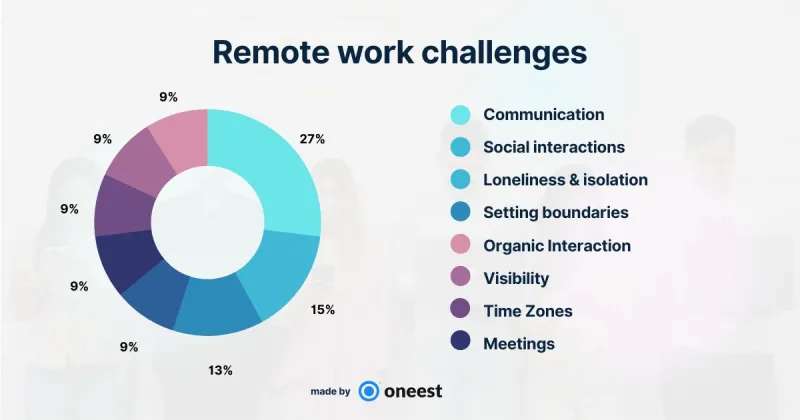
Photo: research team collaboration remote work communication breakdown, via oneest.com
The Problem Nobody Names at the Kickoff Meeting
Most distributed research teams begin with genuine enthusiasm. There is a shared hypothesis, a complementary mix of expertise, and at least one optimistic timeline scrawled on a whiteboard or shared slide deck. What rarely gets discussed at that first meeting is the infrastructure that will hold the project together when momentum fades, schedules diverge, and decisions need to be made without everyone in the same room.
The result is predictable: weeks pass, email threads grow unwieldy, and the original research question gets buried beneath competing interpretations of who was supposed to do what. This is not a story about difficult colleagues. It is a story about structural failure—and it plays out in research groups across the United States every day.
Understanding why collaborative projects stall requires looking past interpersonal friction and examining the actual mechanics of how distributed teams communicate, assign responsibility, and resolve disagreement. When those mechanics are poorly designed, even the most promising research agenda pays what might be called a collaboration tax: a slow, invisible drain on time, energy, and intellectual momentum that compounds with every unanswered message and every deferred decision.
When Asynchronous Communication Becomes a Bottleneck
The shift toward distributed and hybrid research teams has made asynchronous communication a default mode of collaboration. Email, shared documents, and project management platforms allow researchers across time zones and institutions to contribute on flexible schedules. But flexibility without structure produces a specific kind of dysfunction.
In asynchronous environments, the absence of real-time feedback means that ambiguous messages stay ambiguous. A question sent on Monday may not receive a substantive response until Thursday—by which point the person who asked it has either made a unilateral decision, stalled entirely, or sent three follow-up messages that have now created a nested thread nobody can fully reconstruct. Multiply this across a six-person team operating over eight months, and the accumulated cognitive overhead becomes staggering.
The deeper problem is that asynchronous communication tends to compress nuance. Complex methodological decisions—those that genuinely require deliberation—get flattened into quick replies that prioritize speed over clarity. A researcher confirms a data collection approach with a single-line response when what the situation actually called for was a thirty-minute conversation. The decision gets made, but the reasoning behind it never gets documented, and when questions arise later in the project, no one can reconstruct why that choice was made.
Role Ambiguity as a Methodological Flaw
Research methodology courses devote considerable attention to study design, sampling, and analysis. Far less attention goes to the internal governance of research teams—specifically, who is authorized to make which decisions and under what conditions. This gap has real consequences.
In many collaborative projects, role definitions are implicit rather than explicit. Everyone understands in a general sense that one person leads the analysis and another manages data collection, but the boundaries of those roles are never formally articulated. When a decision falls at the edge of someone's understood jurisdiction, it either gets escalated unnecessarily or avoided entirely. Both outcomes slow the project.
Role ambiguity also creates accountability gaps. When something goes wrong—a data entry error, a missed IRB amendment, a miscommunication with an external partner—unclear role boundaries make it genuinely difficult to identify where the breakdown occurred. This is not merely an administrative inconvenience. In research contexts, traceability matters. If you cannot reconstruct who was responsible for a given decision, you cannot evaluate whether your processes are sound, and you cannot improve them for the next project.
Treating role definition as a methodological step rather than a managerial formality changes how teams approach it. A well-constructed responsibility matrix—specifying not just who owns each task but who must be consulted, who must be informed, and who holds final decision-making authority—functions as a structural safeguard for the research process itself.
Decision-Making Bottlenecks and the Cost of Deferred Judgment
Many collaborative research teams concentrate decision-making authority at the top. A principal investigator or project lead must sign off on significant choices before the team can move forward. In theory, this protects coherence and quality. In practice, it creates a single point of failure.
When one person controls the critical decision pathway, the project moves at that person's pace. A PI managing multiple grants, teaching responsibilities, and institutional commitments may not be able to respond to a pending decision for days. The team waits. Deadlines shift. The window for a particular data collection opportunity closes. And because the bottleneck is structural rather than intentional, it rarely gets addressed directly—it simply becomes a feature of how the project operates, absorbed into an increasingly padded timeline.
The solution is not to remove oversight but to distribute it more deliberately. Tiered decision-making frameworks—where routine decisions are handled at the team level, significant methodological choices require PI review, and only high-stakes changes trigger full-team deliberation—preserve quality control without creating unnecessary delays. Establishing these tiers at the outset of a project, rather than improvising them under pressure, is what separates teams that sustain momentum from those that lose it.
Practical Protocols for Collaborative Research That Actually Moves
Restoring momentum to a stalled collaborative project—or preventing the stall in the first place—requires treating workflow design as seriously as study design. Several protocols can make a material difference.
Structured communication cadences. Replace ad hoc messaging with predictable rhythms. A brief weekly synchronous check-in, however short, creates a reliable venue for resolving the small decisions that accumulate in inboxes. Reserve asynchronous channels for information sharing rather than deliberation.
Decision logs. Every significant methodological choice should be recorded in a shared, searchable document: what was decided, who made the decision, what alternatives were considered, and why the chosen approach was selected. This takes minutes to maintain and saves hours when questions arise during analysis or peer review.
Explicit handoff protocols. When work moves from one team member to another—data collection to analysis, analysis to writing—define what a complete handoff looks like. What files are transferred? What documentation accompanies them? What questions must be answered before the receiving party can proceed? Treating handoffs as formal events rather than informal transfers prevents the information loss that compounds over the course of a long project.
Escalation thresholds. Define in advance what kinds of disagreements require PI involvement and what kinds the team is empowered to resolve independently. This reduces the cognitive burden on everyone and prevents the reflexive escalation that clogs decision pipelines.
Rigor Applies to How You Work, Not Just What You Study
The research community has developed sophisticated standards for evaluating the quality of study designs, analytical methods, and reporting practices. Comparatively little attention has been paid to the quality of collaborative processes—the internal workflows that determine whether a well-designed study ever reaches completion.
That gap is worth closing. A research team that communicates clearly, defines roles precisely, and makes decisions efficiently does not just produce work faster. It produces work that is more traceable, more defensible, and more reproducible—because the reasoning behind every consequential choice has been captured and preserved. That is not a soft skill. That is a methodological standard, and it deserves the same rigor you bring to everything else in your research practice.