

Graphic designer creates visual content for brands, businesses, websites, and marketing campaigns. From logos and packaging to social media posts and website banners, graphic design shapes how people see and trust a brand. Today, businesses need strong visuals more than ever. Because of this, skilled graphic designers stay in demand across digital marketing, ecommerce, advertising, and branding.
Still, many beginners feel confused about where to start. Some want to know the skills they need, while others look for salary details or career options. So, this guide explains everything in a simple and practical way. You will learn what a graphic designer does, which tools matter most, how much designers earn in the UK, and how to grow in this field step by step.
What Is a Graphic Designer?
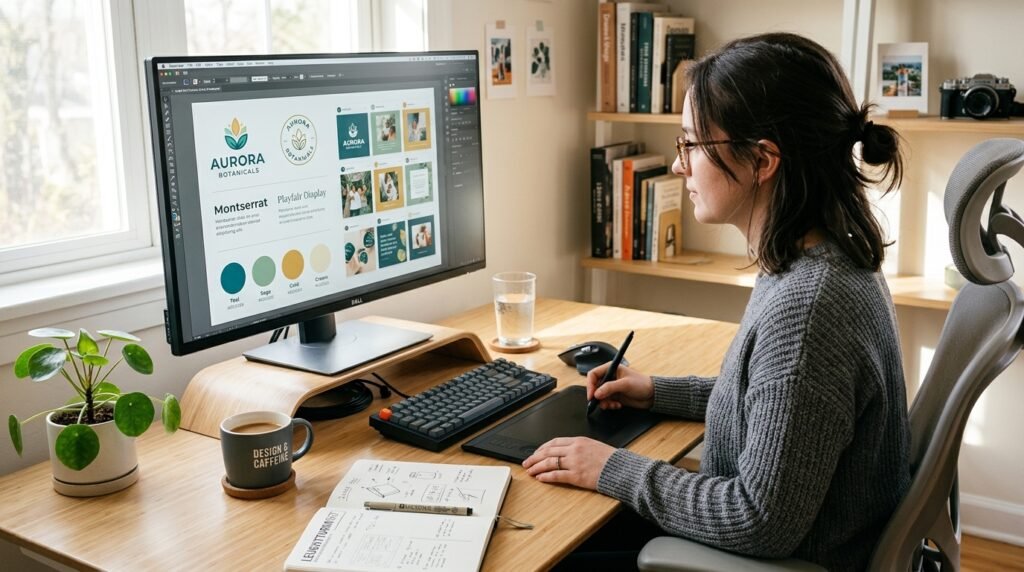
A graphic designer is a creative professional who combines visuals, typography, colors, and layout to communicate ideas clearly. Their work helps brands attract attention and connect with people.
Graphic designers work on both print and digital projects, including:
- Logos
- Business cards
- Social media graphics
- Product packaging
- Website banners
- Advertisements
- Brochures
- Presentations
Some designers focus on branding, while others move into UI/UX design, motion graphics, or digital marketing visuals.
What Does a Graphic Designer Do?
Graphic designers handle many creative tasks during a project. However, the exact work depends on the company, industry, or niche.
Common Tasks
Most graphic designers:
- Create visual concepts
- Design marketing materials
- Edit photos and graphics
- Build layouts for print or web
- Choose fonts and colors
- Prepare files for publishing or printing
- Work with clients and marketing teams
Along with creativity, designers also solve communication problems through visuals.
Real Examples of Design Work
Graphic designers create content that people see every day, such as:
- Restaurant menus
- Ecommerce product banners
- YouTube thumbnails
- Packaging labels
- Social media ads
- Mobile app graphics
- Infographics
For example, an ecommerce brand may hire one designer to handle logo design, product packaging, Instagram posts, and promotional banners together.
Where Graphic Designers Work
Graphic designers work in:
- Marketing agencies
- Design studios
- Ecommerce companies
- Printing companies
- Media houses
- Software companies
- Startups
Many designers also work remotely or build freelance careers through online marketplaces.
Graphic Designer Skills You Need
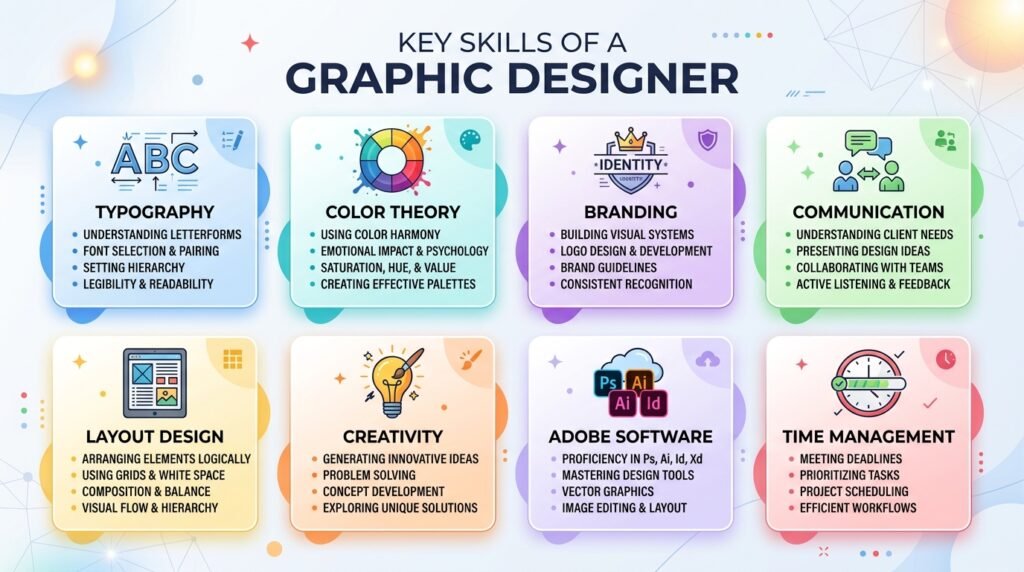
A successful graphic designer needs creative, technical, and communication skills. While you do not need to learn everything at once, strong fundamentals help you grow faster.
Creative Skills
Creative thinking helps designers turn simple ideas into strong visuals. This includes:
- Color selection
- Visual hierarchy
- Branding ideas
- Layout balance
- Composition
Strong creativity also helps designers create unique work instead of copying trends.
Communication and Teamwork
Graphic designers often work with:
- Clients
- Content writers
- Developers
- Marketing teams
- Brand managers
Because of this, clear communication matters a lot. Designers must explain ideas, understand feedback, and handle revisions professionally.
Typography and Layout
Typography controls how text looks inside a design. Good typography improves readability and makes visuals look more polished.
Designers should understand:
- Font pairing
- Alignment
- Spacing
- Readability
- Text hierarchy
Time Management
Most designers handle multiple projects at the same time. So, time management becomes a valuable skill.
Good time management helps with:
- Meeting deadlines
- Faster revisions
- Better workflow
- Client communication
Software Skills
Most graphic designers use tools from Adobe, especially:
- Adobe Photoshop
- Adobe Illustrator
- Adobe InDesign
Many designers also use:
- Figma
- Canva
Print and Digital Design Skills
Print design focuses on physical materials like posters, brochures, packaging, and magazines.
Digital design focuses on:
- Website graphics
- Social media posts
- Email banners
- Online ads
- Mobile app visuals
Today, businesses usually need both print and digital content. Because of this, many designers learn both areas together.
Tools and Software Graphic Designers Use
Design software helps graphic designers create professional visuals faster and more accurately.
| Tool | Main Use |
| Adobe Photoshop | Photo editing, banners, social media graphics |
| Adobe Illustrator | Logo design, vector artwork, icons |
| Adobe InDesign | Magazines, brochures, publishing layouts |
| Figma | UI and website design |
| Canva | Quick design creation for beginners |
| Adobe After Effects | Motion graphics and animations |
If you are new, start with one main tool first. Then slowly expand your skill set based on your niche.
How to Become a Graphic Designer
You do not always need a university degree to become a graphic designer. Still, practical skills and portfolio quality matter a lot.
Learn the Basics
Start with:
- Typography
- Color theory
- Layout design
- Branding basics
- Composition
- Visual hierarchy
You can learn through YouTube tutorials, design blogs, and online courses.
Take a Course or Degree
Some designers choose formal education, while others learn online through platforms like Coursera and Udemy.
A degree may help in some companies. However, many employers focus more on practical skills and portfolio work.
Build Practical Work
Practice improves your design skills faster than theory alone.
Start creating:
- Logo concepts
- Social media posts
- Packaging mockups
- Website banners
- Brand identity projects
You can also redesign existing brands for practice.
Create a Portfolio
A portfolio shows your design quality and creative style.
Your portfolio should include:
- Branding work
- Social media designs
- Mockups
- Packaging concepts
- Case studies
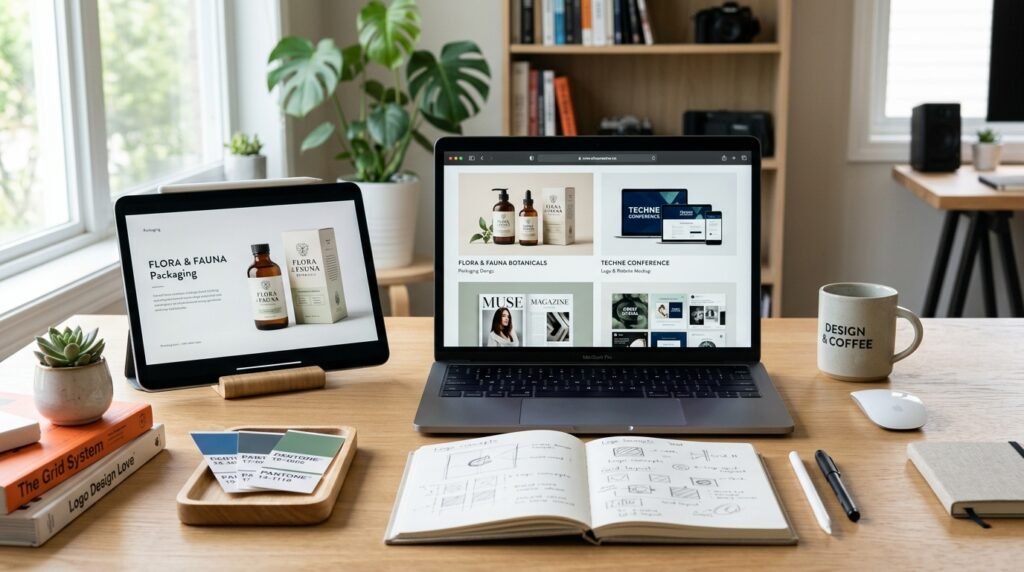
Most designers use platforms like Behance to display their work online.
Get Internships or Entry-Level Work
Internships help beginners understand:
- Client communication
- Design workflow
- Team collaboration
- Project deadlines
You can also start with freelance projects or small local businesses to gain experience.
Graphic Designer Salary in the UK
Graphic designer salaries in the UK depend on experience, skills, location, and specialization.
| Experience Level | Average Salary Range |
| Junior Graphic Designer | £20,000 – £25,000 |
| Mid-Level Designer | £28,000 – £40,000 |
| Senior Designer | £45,000 – £60,000+ |
| Freelance Designer | Varies by project and clients |
Designers with skills in UI/UX, branding, or motion graphics often earn higher salaries.
Types of Graphic Design Jobs
Graphic design includes many specializations. As designers gain experience, many choose one area to focus on.
Branding Designer
Branding designers create:
- Logos
- Brand guidelines
- Visual identity systems
- Packaging concepts
Their work helps businesses build a recognizable identity.
Print Designer
Print designers focus on:
- Flyers
- Posters
- Magazines
- Packaging
- Brochures
They also prepare files for professional printing.
Digital Designer
Digital designers create:
- Social media graphics
- Web banners
- Email visuals
- Online advertisements
This field keeps growing because businesses depend heavily on digital marketing.
UX/UI Designer
UI designers create interfaces for websites and apps, while UX designers improve user experience and usability.
Many graphic designers later shift into UI/UX because demand continues to grow.
Motion Graphics Designer
Motion graphics designers create animations for:
- Videos
- Advertisements
- YouTube content
- Social media reels
This field combines graphic design with animation skills.
How to Build a Strong Graphic Design Portfolio
A portfolio often decides whether you get clients or interviews. So, quality matters more than quantity.
What to Include
Your portfolio should include:
- Logo projects
- Branding work
- Packaging designs
- Social media graphics
- Website visuals
- Case studies
Show projects that match the type of work you want in the future.
How Many Projects to Show
Most beginners should include:
- 5 to 10 strong projects
Too many weak projects can reduce overall portfolio quality.
Common Mistakes to Avoid
Avoid:
- Poor mockups
- Low-quality images
- Weak typography
- Repetitive designs
- Copying famous brands
Also, keep your portfolio clean and easy to navigate.
Graphic Designer Career Path
Graphic design offers several growth opportunities. Over time, designers can move into leadership or specialized roles.
Junior to Senior Growth
Most designers move through stages like:
- Junior Designer
- Mid-Level Designer
- Senior Designer
- Art Director
- Creative Director
Each stage brings more responsibility and creative control.
In-House vs Agency vs Freelance
| Work Type | Main Benefit |
| In-House | Stable work and long-term projects |
| Agency | Fast learning and different clients |
| Freelance | Flexible schedule and independent work |
Each path suits different working styles and career goals.
Skills That Help You Grow
These skills help designers advance faster:
- Branding
- UI/UX design
- Motion graphics
- Marketing knowledge
- Presentation skills
- Client communication
Learning content marketing and SEO can also help designers create stronger website visuals and digital campaigns.
Conclusion
Graphic design combines creativity, communication, and technical skills into one career path. Today, businesses need strong visuals for websites, social media, ecommerce, and branding. Because of this, skilled graphic designers continue to stay valuable across many industries.
If you are just starting, focus on learning the basics first. Then build practical projects, improve your portfolio, and learn industry-standard tools step by step. Over time, your skills, confidence, and opportunities will grow together.
FAQ About Graphic Designer
Do you need a degree to be a graphic designer?
No. Many successful designers learn through online courses, self-practice, and freelance work.
Can you become a graphic designer without experience?
Yes. Start with practice projects, internships, or freelance work to build your portfolio.
Is graphic design a good career in the UK?
Yes. Graphic design still has strong demand in ecommerce, advertising, branding, and digital marketing.
What software should a beginner learn first?
Most beginners start with Adobe Photoshop and Adobe Illustrator because they are widely used across the industry.
What are the 7 types of graphic design?
The main types include:
- Branding design
- Print design
- Digital design
- UI design
- UX design
- Motion graphics
- Packaging design
Pingback: 7 Powerful AI Prompt Engineering Techniques for Beginners