
AI is replacing traditional jobs faster than many workers expected. Businesses now use artificial intelligence to handle customer support, write content, organize data, and even assist with coding. Because of this, many people worry about job security and the future of work.
Still, here’s the thing. AI is not replacing every worker completely. In most industries, AI replaces repetitive tasks first instead of entire careers.
That difference matters.
Many companies now use AI tools to improve productivity, reduce costs, and speed up daily work. At the same time, workers still handle decision-making, communication, leadership, and creative thinking.
This article explains what is really happening, which jobs face the biggest risk, which careers remain safer, and how workers can stay valuable in 2026 and beyond.
Is AI Really Replacing Traditional Jobs?
Automation has changed workplaces for decades. Factories started using machines long before modern AI systems existed. Later, software automated payroll, scheduling, and record keeping.
Now, generative AI has pushed automation into office jobs too.
Businesses use AI systems to:
- draft emails
- create reports
- answer customer questions
- analyze data
- generate images
- assist with coding
As a result, some companies are slowing hiring while others reduce entry-level roles.
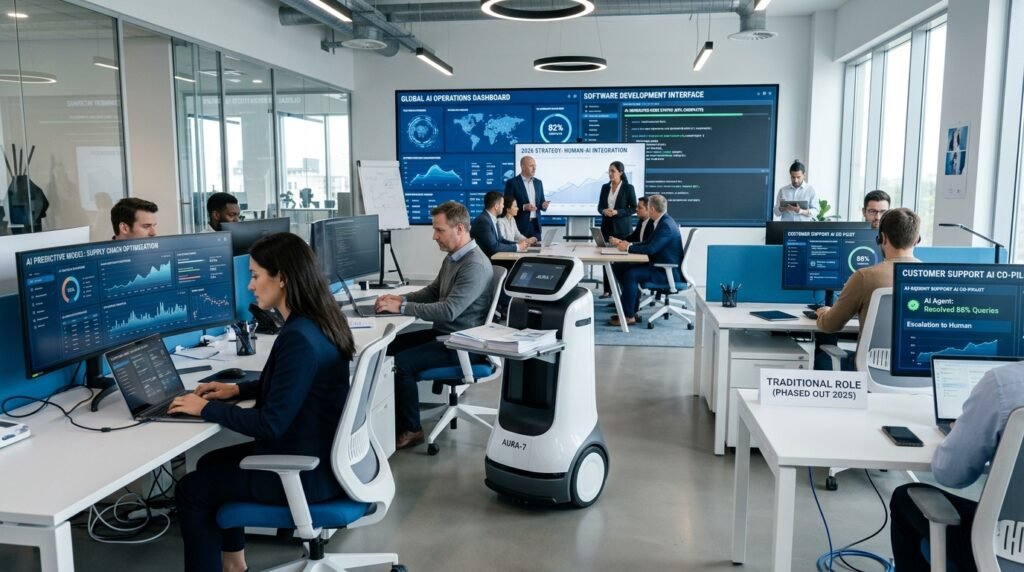
Still, most businesses are not fully replacing skilled employees. Instead, they expect workers to use AI tools alongside human skills.
For example, customer support teams now use AI chat systems for basic questions. Marketing teams use AI for outlines and keyword research. Developers use coding assistants to speed up simple tasks.
What this really means is AI changes how work gets done instead of removing every job completely.
Jobs Most at Risk From AI
Jobs that depend heavily on repetitive digital work face the biggest pressure from automation.
High-Risk Jobs in 2026
| Job Role | Why It Faces Risk | Risk Level |
| Data Entry | Repetitive data processing | High |
| Customer Support | AI chat systems handle common questions | High |
| Bookkeeping | Automated financial software reduces manual work | High |
| Administrative Work | Scheduling and reporting tasks are automated | High |
| Translation | AI handles basic language conversion | Medium-High |
| Basic Content Writing | AI creates simple drafts quickly | Medium |
| Graphic Design | AI generates simple visuals and layouts | Medium |
| Entry-Level Coding | AI speeds up repetitive coding tasks | Medium |
Data Entry and Admin Work
Data entry and administrative jobs face strong automation pressure because AI systems process information much faster than humans. Businesses now automate spreadsheets, invoices, scheduling, and document management with minimal human input.
Customer Support
Many companies use AI chatbots for:
- order tracking
- refunds
- password resets
- common customer questions
Human workers still manage difficult situations. However, entry-level support roles continue shrinking in many industries.
Content Writing and Graphic Design
AI tools now create blog drafts, social posts, product descriptions, logos, and marketing graphics within seconds.
Still, skilled writers and designers remain valuable because businesses still need:
- brand strategy
- creativity
- editing
- audience research
- original thinking
This connects closely with related topics like AI content marketing, SEO writing strategies, and AI productivity tools for digital teams.
Entry-Level Coding
AI coding assistants now help developers write functions, debug code, and explain scripts faster. Because of this, junior developers face more competition than before.
Even so, experienced developers still guide projects, review security, and solve complex technical problems.
Jobs That Are Safer From AI
Some careers remain safer because they depend heavily on human interaction, judgment, and physical work.
Healthcare
Doctors, nurses, and caregivers still rely on empathy, communication, and decision-making. AI can support medical analysis, but patients still trust human professionals for care and treatment decisions.
Skilled Trades
Electricians, plumbers, mechanics, and construction workers operate in changing real-world environments where automation struggles.
Teachers and Therapists
Teaching and counseling depend heavily on emotional connection and trust. AI tools may assist with planning and organization, but people still prefer human guidance during learning and emotional support.
Leadership and Creative Strategy
Managers and business leaders handle:
- negotiations
- strategy
- ethics
- team coordination
Likewise, creative directors still guide branding, storytelling, and audience engagement. AI can assist with ideas, but human judgment remains central.
AI Is Replacing Tasks More Than Entire Jobs
This is one of the biggest points many articles miss.
Most jobs contain dozens of small tasks. AI usually automates only part of the workload.
For example, a marketer may use AI to:
- summarize reports
- generate ad ideas
- draft emails
- organize research
However, the same worker still:
- builds strategy
- manages budgets
- reviews campaigns
- makes final decisions
The same pattern appears across finance, education, healthcare, and software development.
So instead of full job replacement, many workplaces now combine AI support with human oversight. Workers who learn AI tools often become more productive and more valuable to employers.
How AI Is Changing Different Industries
Healthcare
Hospitals use AI for medical imaging, scheduling, and patient record analysis. Still, healthcare workers remain essential because medical care depends on trust and judgment.
Finance
Banks and financial firms automate fraud detection, reporting, and customer support. As a result, repetitive office work continues to decline.
Marketing
Marketing teams now use AI for:
- keyword research
- content drafts
- ad copy
- audience analysis
Still, human strategy drives successful campaigns.
Education
Teachers use AI tools for grading and lesson planning. However, classrooms still depend heavily on human interaction and guidance.
Manufacturing and Retail
Factories continue expanding automation for production and quality control. Retail businesses also use AI for inventory tracking and customer service.
Software Development
Developers increasingly use AI coding assistants to speed up workflows. Even so, software engineering still requires testing, architecture planning, and security review.
AI Job Replacement Statistics in 2026
Recent reports show that AI adoption continues growing across global industries.
Key AI Employment Statistics
| Statistic | Estimated Impact |
| Companies using AI tools | More than 70% |
| Businesses planning more AI investment | Around 60% |
| Administrative tasks likely to be automated | Up to 40% |
| Customer support tasks automated | Up to 60% |
| Workers expected to change skills by 2030 | Nearly 50% |
Research from the World Economic Forum suggests AI may remove some roles while creating new opportunities linked to automation, AI operations, and digital systems.
How Workers Can Stay Valuable in the AI Era
Workers who adapt to changing technology will likely stay competitive longer.
Learn AI Literacy
Employees do not need advanced technical skills, but understanding AI tools is becoming important across many industries.
Strengthen Communication Skills
Businesses still need workers who can:
- explain ideas clearly
- manage teams
- handle clients
- solve misunderstandings
Improve Critical Thinking
AI systems still produce errors and false information. Workers who can review and verify information remain valuable.
Focus on Creativity and Adaptability
Original thinking, flexibility, and emotional intelligence continue to matter because AI still struggles with human relationships and complex decision-making.
Will AI Create New Jobs Too?
Yes. AI is already creating new career paths.
Growing AI-Related Roles
| New Role | Main Responsibility |
| AI Trainers | Improve AI responses |
| Prompt Engineers | Create effective instructions |
| AI Compliance Specialists | Monitor ethical AI use |
| Automation Specialists | Build automated workflows |
| AI Operations Managers | Manage AI systems |
Many businesses now need workers who can help teams use AI tools safely and effectively.
UK and USA Job Market Trends
The UK and USA continue seeing major workplace changes linked to AI adoption.
In the UK, businesses increasingly use AI systems to improve efficiency and reduce repetitive office work. Reports also suggest entry-level administrative roles face stronger automation pressure.
In the USA, companies continue investing heavily in AI productivity tools and automation systems. As a result, employers increasingly expect workers to understand digital workflows and AI-assisted tasks.
Across both countries, workers with adaptable skills and strong communication abilities remain in better positions.
Common Myths About AI Replacing Jobs
AI Will Replace All Jobs
This is unlikely because most careers still depend on human judgment, flexibility, and communication.
Degrees No Longer Matter
Education still matters. However, practical skills and adaptability now matter more than before.
AI Works Without Humans
AI systems still require human oversight, corrections, training, and management.
Every Industry Faces the Same Risk
Some industries face much stronger automation pressure than others. Repetitive office tasks remain more vulnerable than hands-on physical work.
Conclusion
AI is replacing traditional jobs in some areas, but it is also changing how work happens across nearly every industry.
The biggest shift is not complete job loss. Instead, workplaces now expect employees to combine human skills with AI tools.
Workers who stay adaptable, improve communication skills, and learn modern digital systems will likely remain valuable in the years ahead.
That is why the future of work will depend less on competing against AI and more on learning how to work alongside it.
Frequently Asked Questions
Which jobs will AI replace first?
Jobs involving repetitive digital tasks like data entry, customer support, bookkeeping, and administrative work face the highest risk.
Is AI replacing jobs in the UK?
Yes. Many UK businesses now use AI tools to automate repetitive office work and improve productivity.
Can AI fully replace humans?
No. AI still struggles with emotional intelligence, ethics, leadership, and human decision-making.
What careers are safe from AI?
Healthcare, skilled trades, teaching, therapy, leadership, and creative strategy roles remain safer because they rely heavily on human interaction.
Will AI create more jobs than it removes?
Many experts believe AI will create new opportunities in automation, compliance, AI operations, and digital systems management.
How can workers prepare for AI?
Workers can improve digital skills, learn AI tools, strengthen communication abilities, and stay adaptable as industries change.
What industries are most affected by AI?
Technology, finance, customer support, marketing, and administrative industries currently face the biggest AI-driven changes.